Unicast vs. Anycast for Webhook Ingress: Cutting Handshake Latency for Global Senders
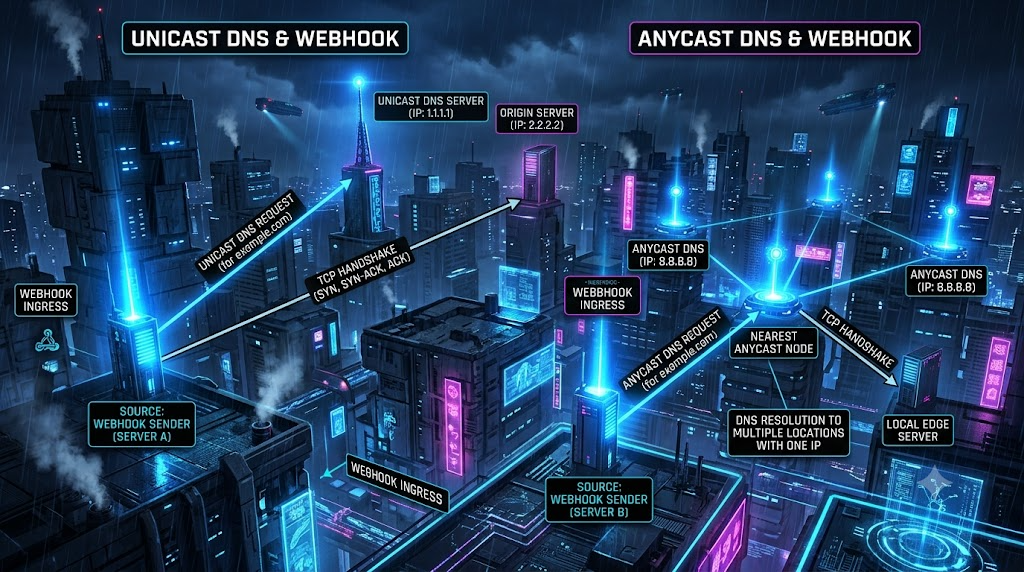
Compare Unicast and Anycast DNS for webhook ingress. Learn how BGP Anycast, TCP Fast Open, and TLS 1.3 0-RTT eliminate latency for high-volume senders.

Blog tag
Articles tagged webhook infrastructure.

Compare Unicast and Anycast DNS for webhook ingress. Learn how BGP Anycast, TCP Fast Open, and TLS 1.3 0-RTT eliminate latency for high-volume senders.

Discover why traditional API rate limiters fail under massive webhook traffic bursts from providers like Shopify and Stripe, and learn how to implement robust multi-tenant isolation.

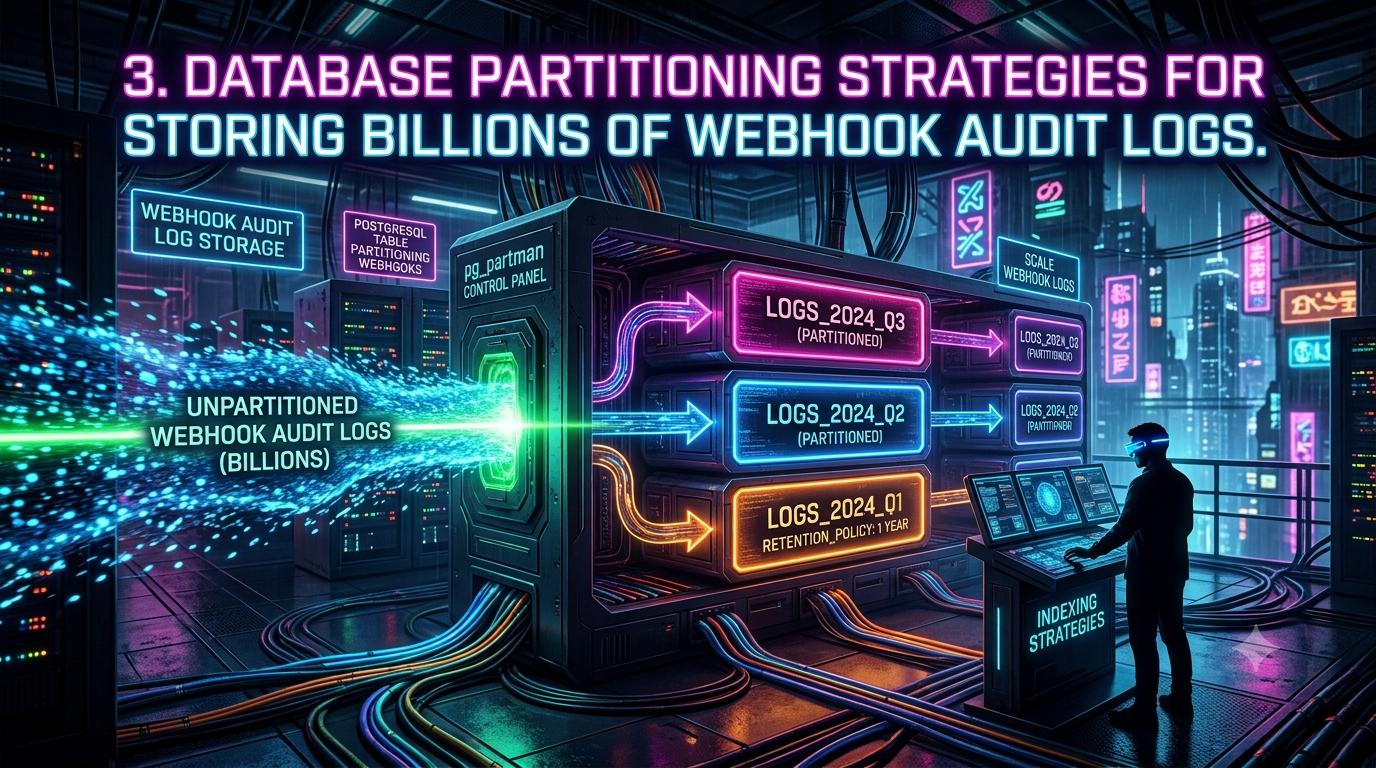
Storing Billions of Webhook Audit Logs in PostgreSQL: Partitioning, Indexing, Compression, and Retention Every SaaS platform that sends or receives webhooks eventually needs a...

Chaos Engineering for Webhooks: How to Simulate and Test Network Failures Site reliability engineers routinely run chaos experiments on internal services.

Multi-Tenant Data Sovereignty: Routing and Storing Regional Webhooks Securely Executive Summary Global SaaS platforms now operate under a growing patchwork of regional data rules...

Taming "At-Least-Once" Delivery: Idempotent Webhook Ingestion in PostgreSQL Webhooks are how payment processors, commerce platforms and card issuers keep your system in sync with...

Building a Custom Webhook Provider: API Design Lessons from Stripe and GitHub Fact-checked against the official Stripe, GitHub and Standard Webhooks documentation in September...

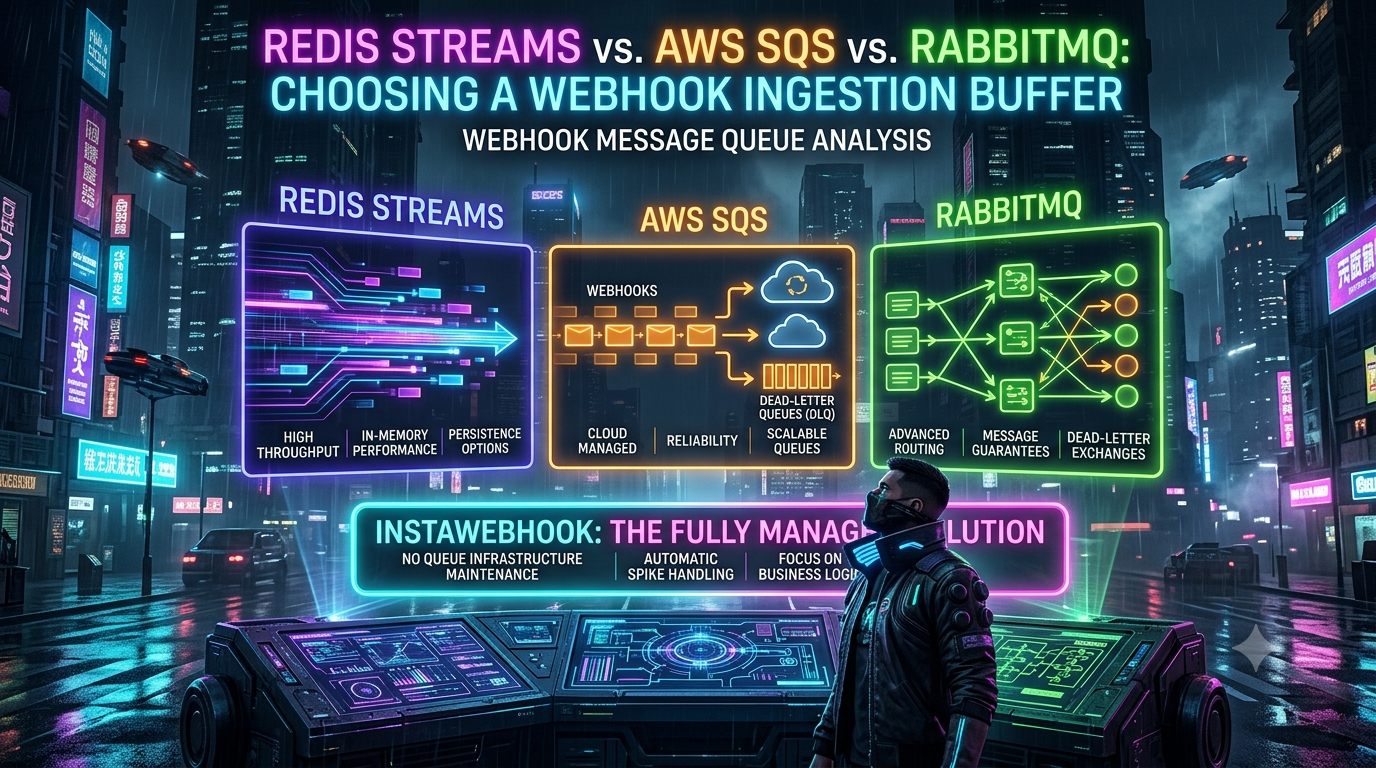
Redis Streams vs. AWS SQS vs. RabbitMQ: Choosing a Webhook Ingestion Buffer In modern cloud architectures, incoming webhooks represent an uncontrollable influx of external data.

Building Async-First APIs: The 202 Accepted Pattern for the AI Era For a decade, most web APIs followed one rule: a client sends a request, the server does the work, and a status...

Static IPs vs. Signatures: Meeting Enterprise Webhook Security Requirements Closing a B2B enterprise deal frequently stalls during the Information Security (InfoSec) review.

Salesforce Outbound Messages vs. Modern Webhooks: An Integration Guide When engineering modern enterprise applications, microservices typically communicate using RESTful JSON...

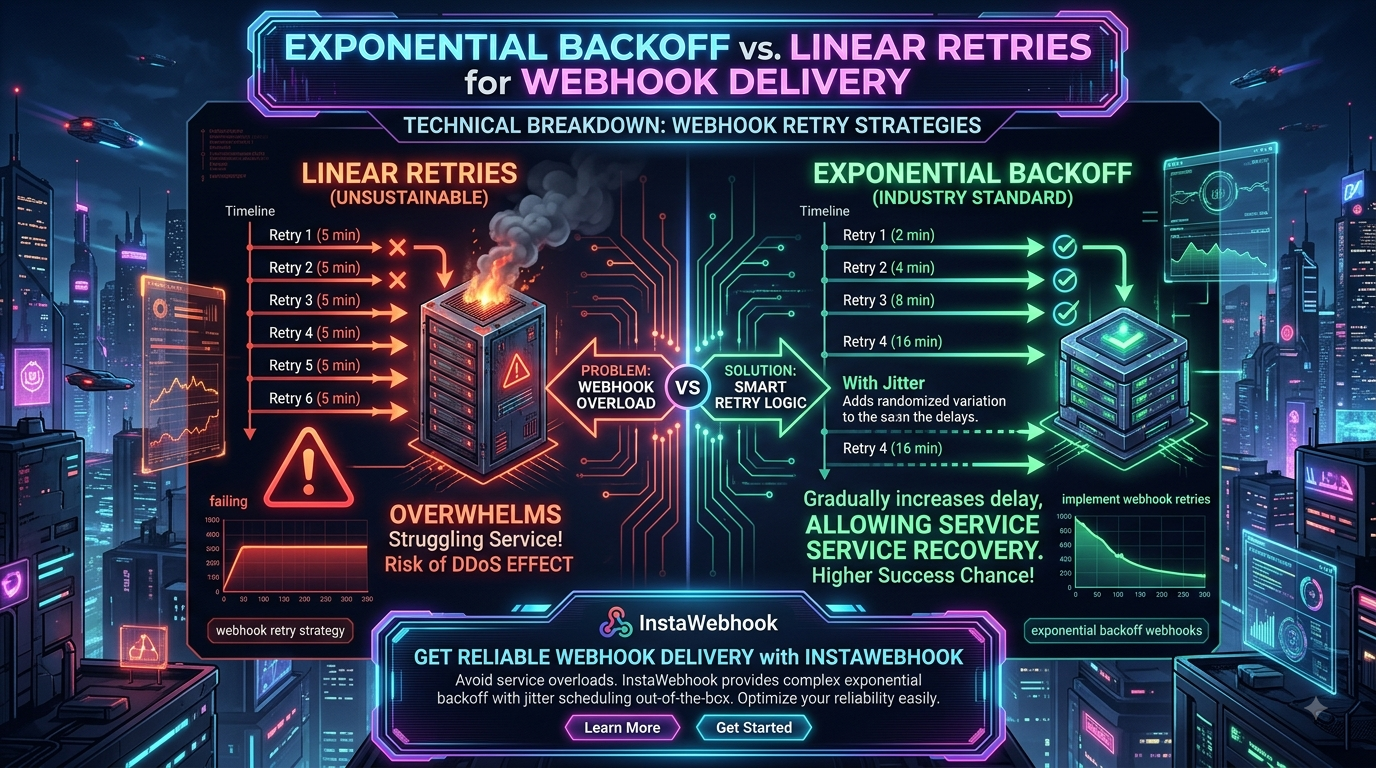
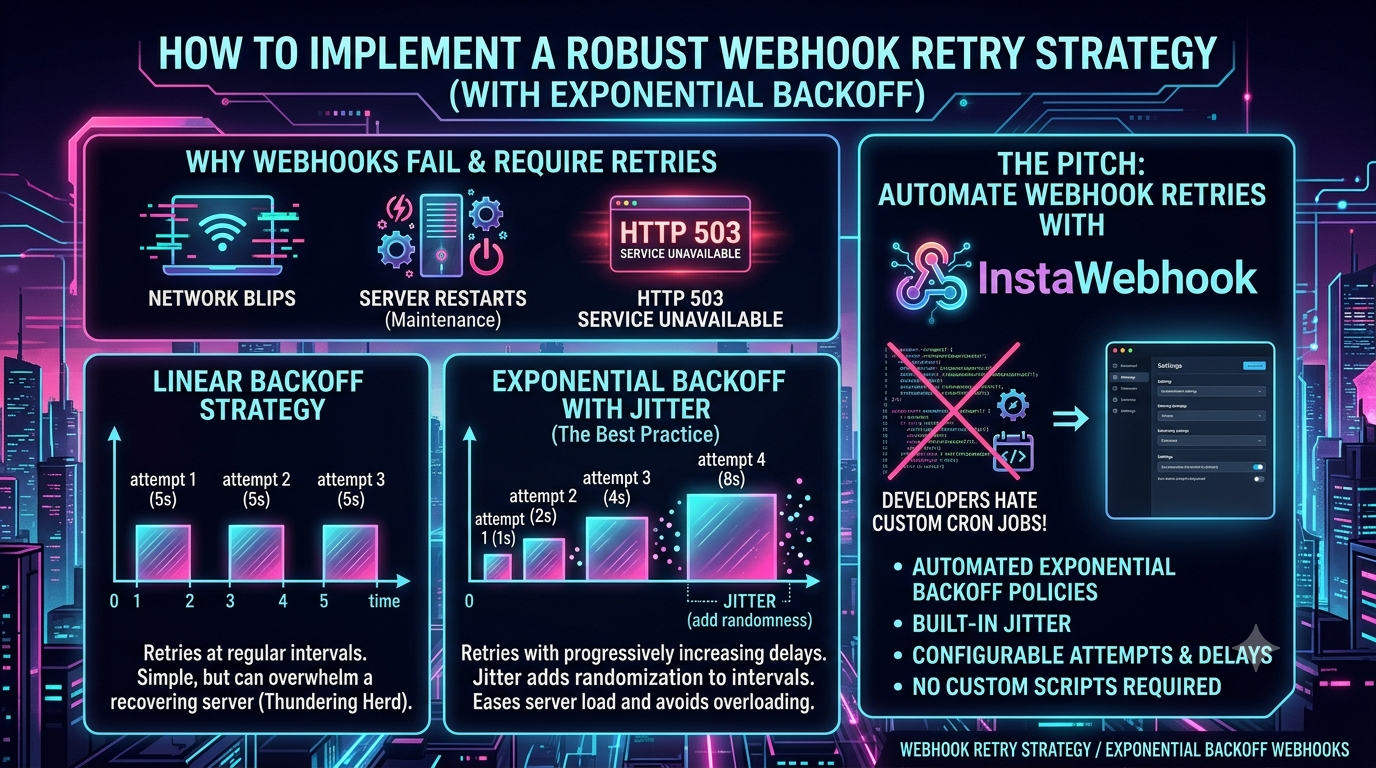
Webhook Retry Strategy: Exponential Backoff vs. Linear Retries (and Why Jitter Is Non-Negotiable) In an ideal event-driven system, every HTTP webhook payload arrives at its...

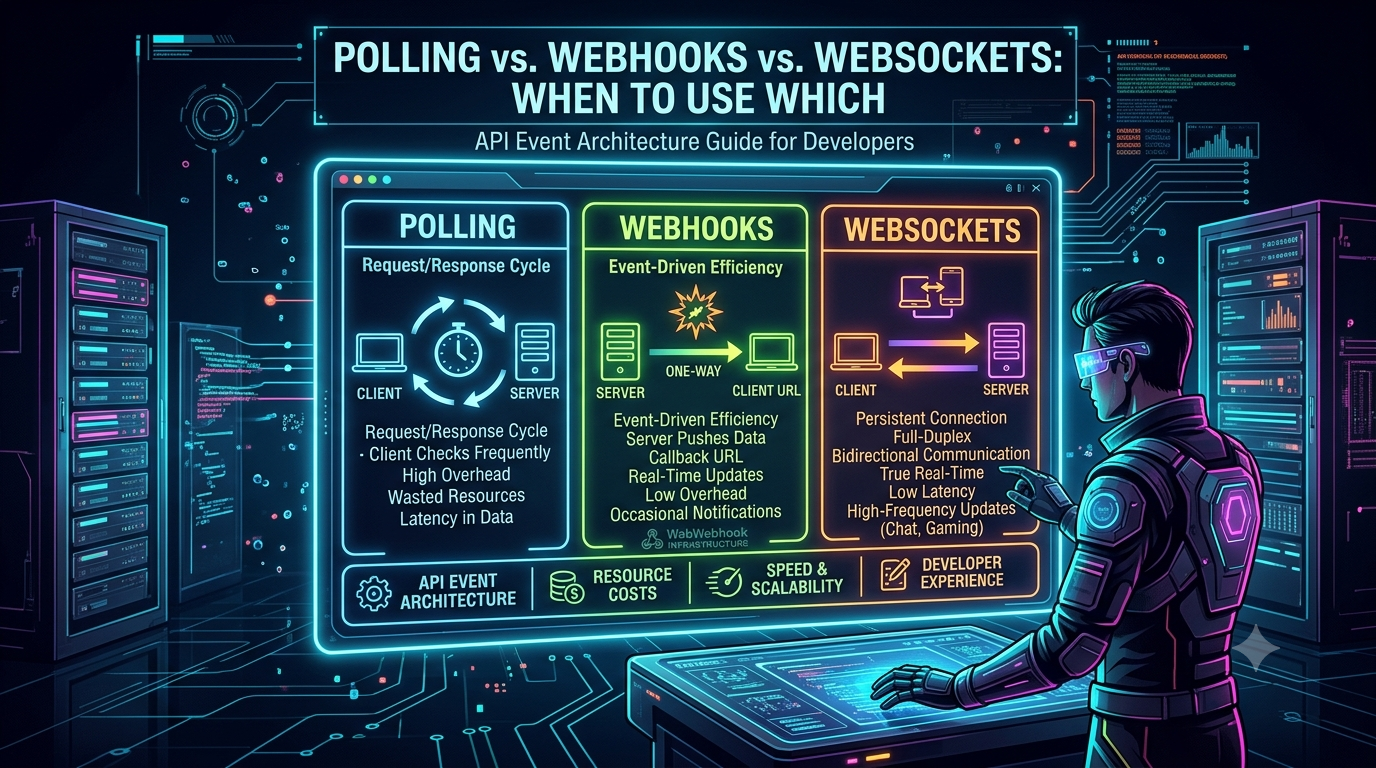
Polling vs. Webhooks vs. WebSockets vs. SSE: Choosing the Right Real-Time Architecture Choosing how your systems communicate state changes is one of the most consequential...

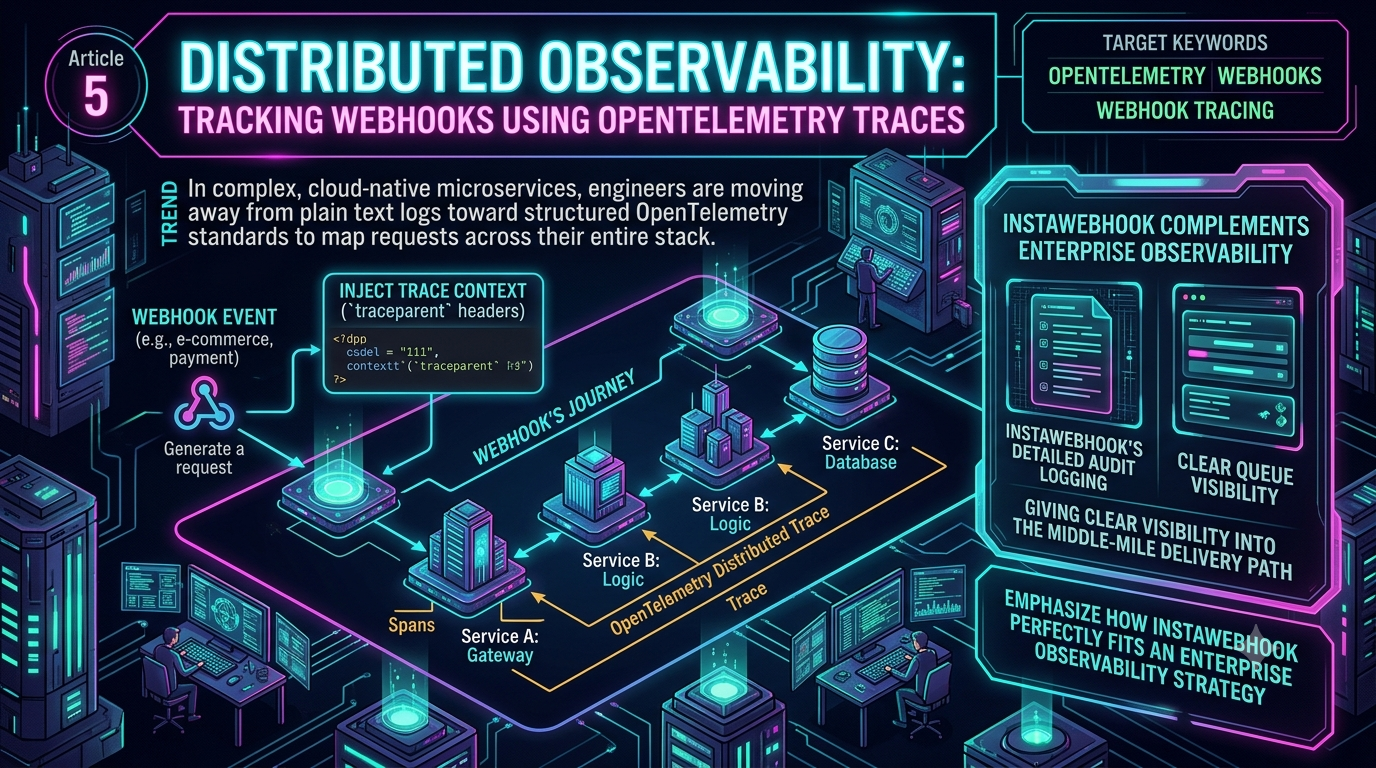
Distributed Observability: Tracing Webhooks with OpenTelemetry In complex, cloud-native microservice architectures, engineers have largely moved away from plain-text logs toward...

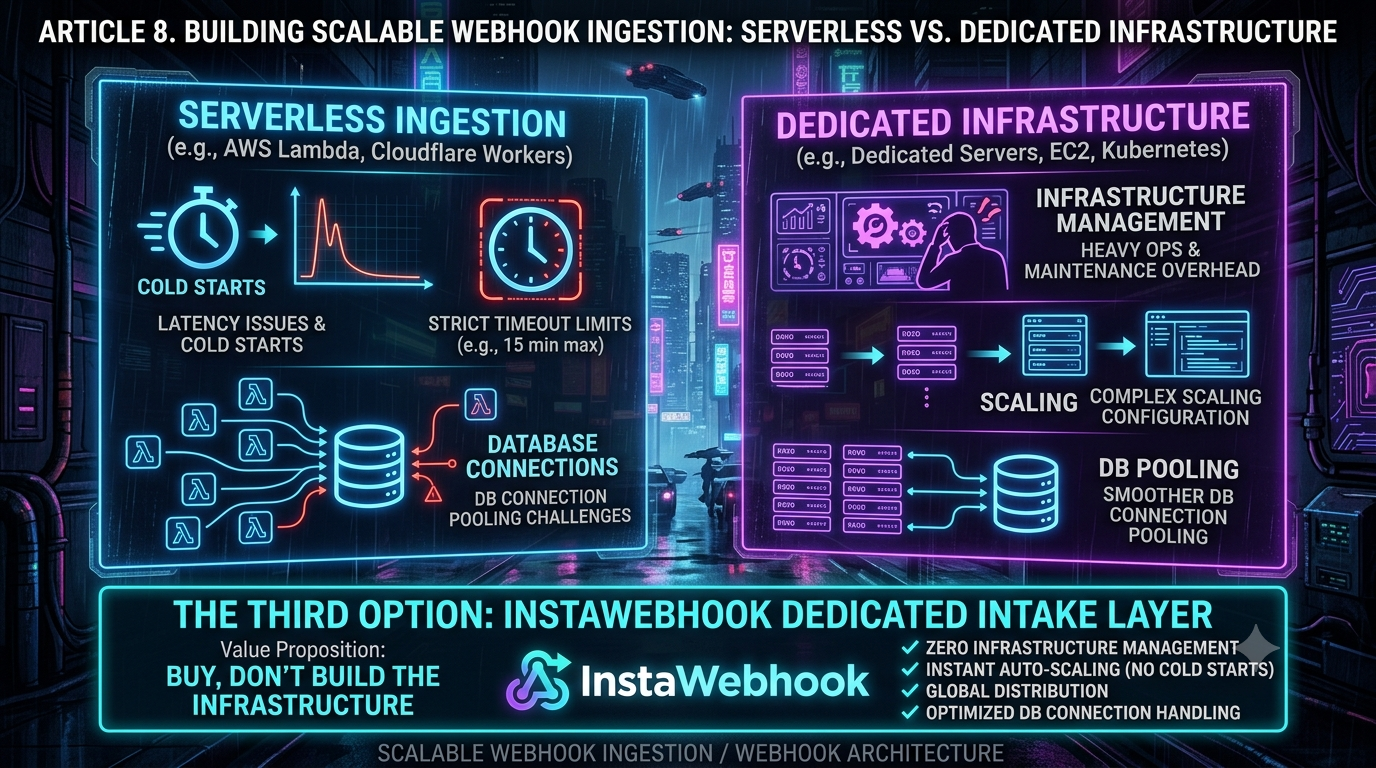
Building Scalable Webhook Ingestion: Serverless vs. Dedicated Infrastructure For modern distributed systems, webhooks are the central nervous system.

Why Your Stripe Webhooks Keep Failing (And How to Fix Them for Good) If you've ever opened your Stripe Dashboard to find a red "failed" badge next to a webhook delivery, you...

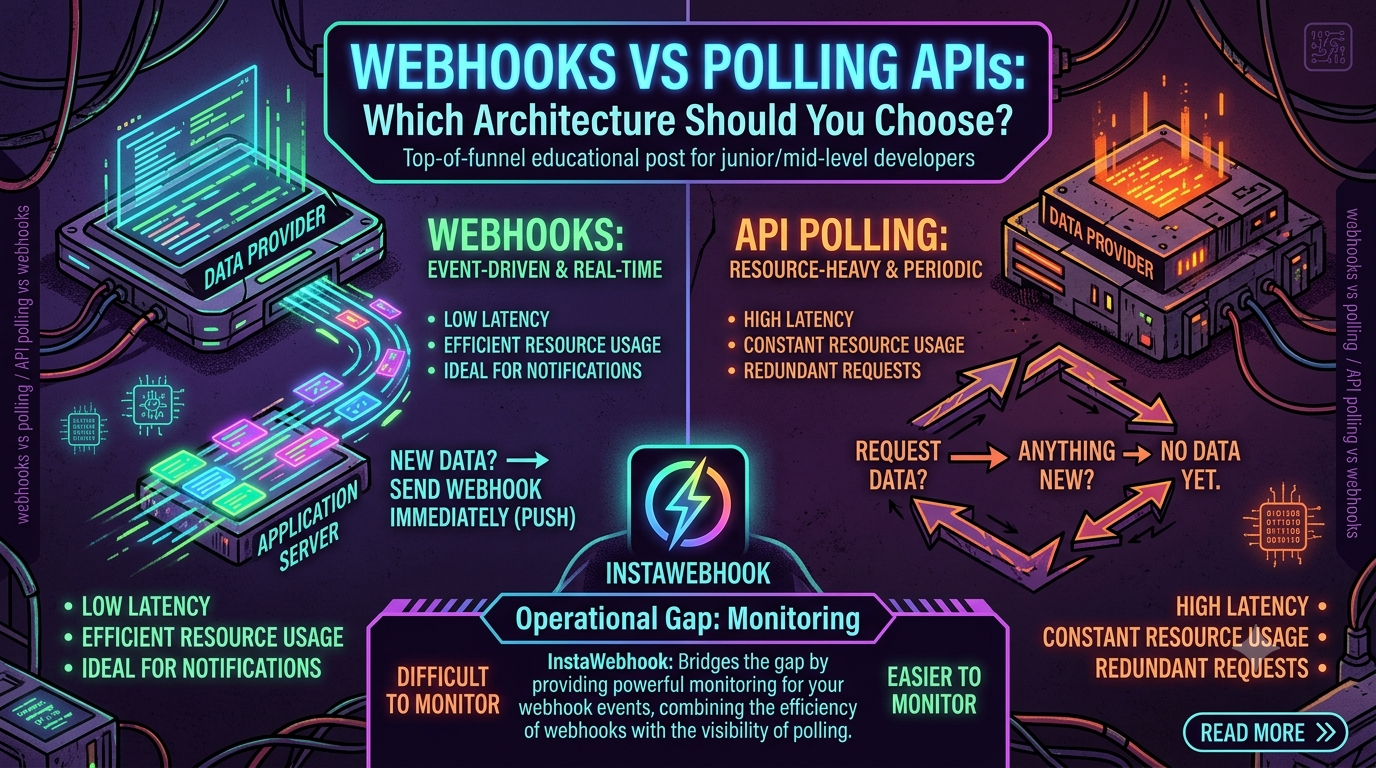
Webhooks vs. Polling APIs: Which Architecture Should You Choose? As a developer moving from building isolated applications to designing distributed systems, you'll inevitably hit a...

How to Implement a Robust Webhook Retry Strategy (with Exponential Backoff) Webhooks have become the nervous system of the modern internet.